Tracing the Role of Independent Audits in Verifying Fair Play Metrics for Digital Gaming Venues
Finley Schulz · Aug 4, 2026

Tracing the Role of Independent Audits in Verifying Fair Play Metrics for Digital Gaming Venues
Independent audits have shaped the verification of fair play metrics in digital gaming venues since the early days of online platforms, and they continue to do so through structured testing protocols that examine random number generators along with payout percentages. Regulatory bodies across multiple jurisdictions require these evaluations to confirm that games operate without manipulation while meeting established return-to-player thresholds. Data from August 2026 shows continued growth in audit requests as operators expand into new markets and adopt advanced technologies.
Early Development of Audit Practices
Gaming laboratories began offering third-party testing services in the 1990s when digital venues first appeared, and they developed methodologies that focused on statistical analysis of game outcomes over large sample sizes. Organizations such as Gaming Laboratories International established standards for RNG certification that later became benchmarks for many regulatory frameworks. Those who have followed the industry note that early audits relied on physical inspections combined with software reviews, whereas modern processes incorporate automated data collection tools that track real-time performance metrics.
Core Components of Fair Play Verification
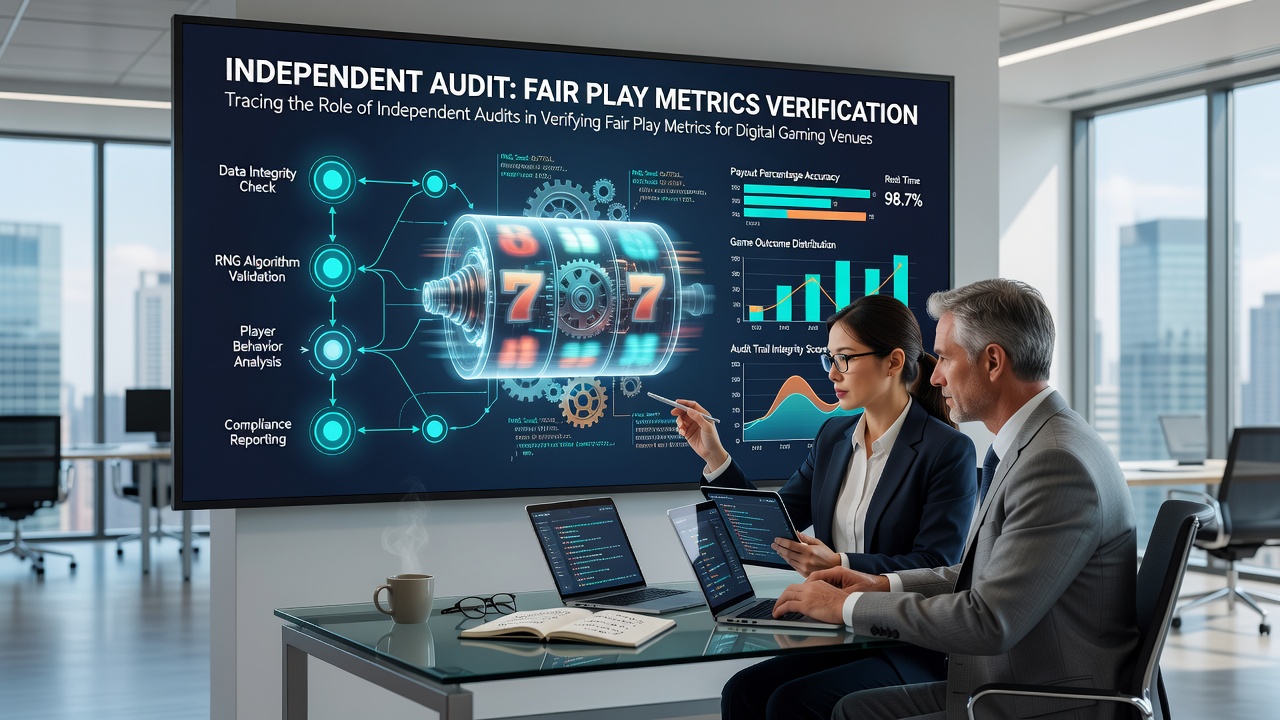
Auditors examine several key areas during each review cycle, including the integrity of random number generation systems, the accuracy of published payout rates, and the security of player data handling procedures. Tests involve running millions of simulated game rounds to verify that results align with expected mathematical probabilities. Research indicates that discrepancies discovered during these evaluations often lead to immediate software corrections before venues resume operations. Observers note that audits also cover bonus mechanics and promotional features to ensure they function as advertised without hidden restrictions that could affect player outcomes.
Regulatory Frameworks and Geographic Variations
Different regions apply distinct requirements for audit frequency and scope. The Nevada Gaming Control Board mandates regular submissions from licensed operators while iGaming Ontario in Canada emphasizes ongoing monitoring through approved testing agencies. Academic studies from the University of Nevada, Reno have analyzed how these varying standards influence operator compliance rates across borders. What's interesting is that some jurisdictions now require public disclosure of audit summaries, which allows players to review certification status directly through official portals.
Turns out the process extends beyond initial certification because many regulators demand periodic re-testing, especially after game updates or platform migrations. Independent firms collect live data feeds from production environments and compare them against laboratory baselines to detect any deviations that might indicate tampering or technical errors.
Technological Advancements in Audit Methods
Recent years have seen integration of blockchain-based logging systems that create immutable records of game results, and these tools help auditors trace every transaction back to its source without relying solely on operator-provided data. Industry reports from the European Gaming and Betting Association highlight how such technologies reduce the time required for comprehensive reviews. Experts have observed that machine learning applications now assist in identifying anomalous patterns within large datasets that traditional statistical methods might overlook.
Case Examples from Established Markets
One study revealed that venues operating under strict audit regimes in Australia experienced fewer disputes related to game fairness after implementing mandatory third-party certifications. Another example involves operators who partnered with multiple testing agencies simultaneously to meet overlapping requirements from different licensing authorities. Those who've studied this process often discover that collaboration between regulators and auditors leads to standardized reporting formats that simplify cross-border operations.
Challenges and Ongoing Adaptations
Digital gaming venues face increasing complexity as live dealer games and virtual reality environments enter the market, requiring auditors to develop new protocols for verifying fairness in real-time streamed content. Data shows that audit costs have risen in line with these technological shifts, yet the investment supports continued market access in regulated territories. Researchers discovered that venues maintaining consistent audit schedules tend to report higher player retention figures, though causation remains under further investigation by academic teams.
Conclusion
Independent audits remain central to maintaining verifiable fair play metrics across digital gaming venues, and their evolution reflects broader changes in technology and regulation. Continued cooperation between testing laboratories, government agencies, and operators ensures that verification processes adapt to new game formats while preserving core standards of transparency and statistical integrity. As markets expand through 2026 and beyond, the role of these audits will likely grow in scope to address emerging challenges in data security and game design.