Mapping the Relationship Between Game Volatility and Bonus Mechanisms in Online Wagering
Tina Becker · Jun 20, 2026

Mapping the Relationship Between Game Volatility and Bonus Mechanisms in Online Wagering
Digital wagering platforms operate through intricate systems where game variance patterns intersect directly with promotional structures, and researchers have documented how these elements shape player engagement across multiple jurisdictions. Variance refers to the statistical spread of outcomes in games such as slots, roulette variants, and table games, while promotional structures encompass welcome bonuses, free spins, cashback offers, and loyalty rewards that operators deploy to retain users. Studies from the University of Las Vegas Nevada Gaming Research Center reveal that platforms adjust bonus parameters based on volatility profiles, with high-variance titles often paired with higher wagering requirements to balance operator margins against user retention goals.
Variance Patterns in Digital Game Offerings
Game developers categorize variance into low, medium, and high tiers according to payout frequency and size, and data collected by the Australian Gambling Research Centre shows that high-variance slots produce larger but less frequent wins compared with low-variance options that deliver smaller, steadier returns. Operators track these metrics through backend analytics, and platforms frequently display volatility indicators in game lobbies so users can select experiences aligned with their risk preferences. In June 2026 several Canadian provinces plan to introduce standardized volatility labeling requirements for licensed operators, which will require explicit disclosure of variance levels alongside return-to-player percentages. This regulatory shift builds on earlier frameworks established by the Alcohol and Gaming Commission of Ontario and aims to provide clearer information for participants navigating promotional bundles tied to specific game types.
Promotional Structures and Their Core Components
Promotional structures on digital platforms typically combine deposit matches, no-deposit credits, and tiered loyalty programs, whereas bonus terms specify playthrough multipliers, game contribution rates, and expiration windows. European Betting and Gaming Association reports indicate that contribution percentages differ markedly by variance category, with low-variance games often counting 100 percent toward wagering targets while high-variance titles may contribute only 20 to 50 percent. Operators calibrate these rates to manage liability exposure, and promotional calendars frequently rotate offers to coincide with new game releases that carry distinct volatility signatures. Platforms also segment promotions by player history, directing high-variance bonus packages toward accounts demonstrating tolerance for longer losing streaks.
Interplay Between Variance and Promotional Design
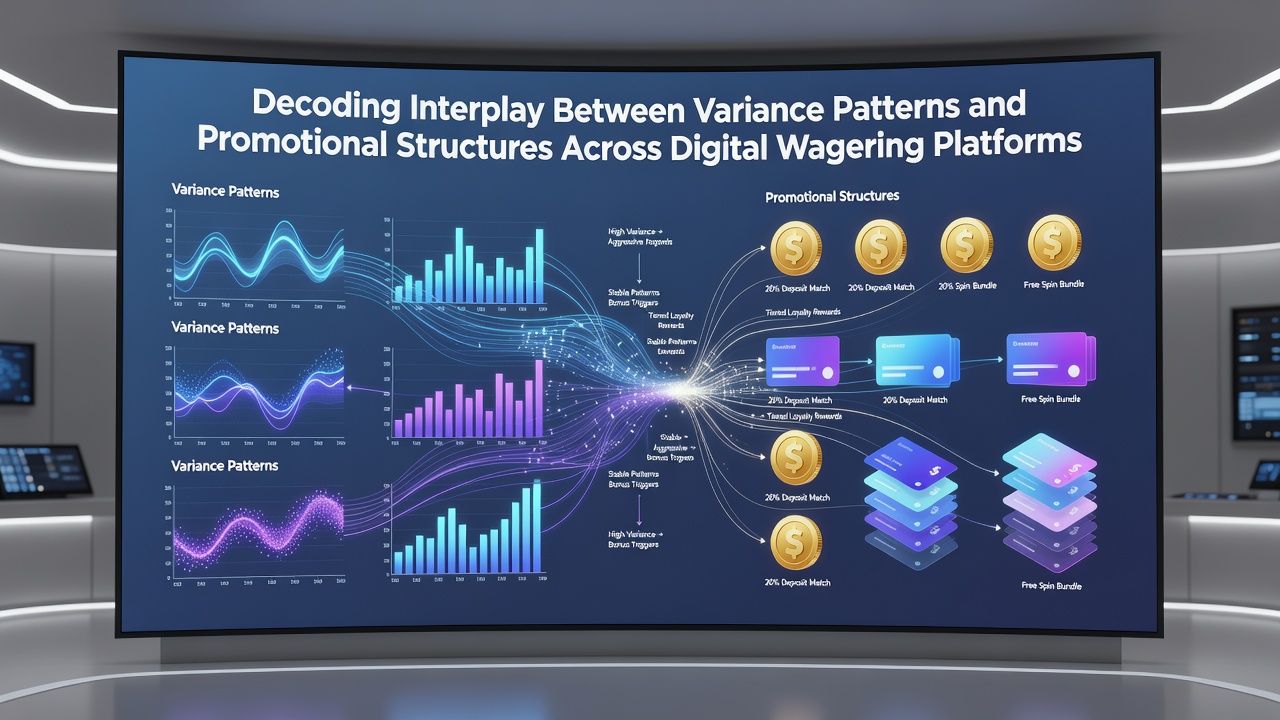
The interaction between variance and promotions creates measurable effects on session length and deposit behavior, according to aggregated transaction data analyzed by the Singaporean National Council on Problem Gambling. High-variance games combined with generous free-spin promotions tend to extend play sessions because users chase infrequent large payouts, yet the same combination can accelerate bonus depletion when hit rates fall below expected thresholds. Low-variance titles paired with cashback offers produce steadier engagement patterns, and platforms leverage this stability to maintain consistent revenue streams across promotional cycles. Algorithms employed by major operators monitor real-time variance-adjusted performance of active bonuses, allowing dynamic adjustments to contribution rates or maximum win caps when certain thresholds are reached. One documented case from a multi-jurisdictional operator in 2025 demonstrated that shifting a high-variance slot from 40 percent to 70 percent contribution within a loyalty promotion increased completion rates by 18 percent without altering overall bonus cost.
Regional Regulatory Influences on These Dynamics
Regulatory bodies across different regions impose varying constraints on how variance information and promotional terms may be presented together. The New Jersey Division of Gaming Enforcement requires operators to publish both volatility ratings and bonus contribution tables in a single accessible location, while the Malta Gaming Authority focuses on ensuring promotional fairness through independent testing of random number generators used in high-variance titles. These requirements influence how platforms structure campaigns, and operators active in multiple markets maintain separate promotional libraries to remain compliant. Data compiled by the Responsible Gambling Council of Canada indicates that clearer variance disclosures correlate with reduced disputes over bonus outcomes, particularly when promotions involve games with pronounced volatility swings.
Analytical Approaches and Platform Adaptations
Advanced analytics platforms now integrate variance simulation models with promotional forecasting tools, enabling operators to predict aggregate payout distributions under different bonus scenarios. Researchers at the University of Sydney's Gambling Treatment and Research Clinic have examined how these models account for player segmentation, noting that promotional structures targeting recreational users often emphasize medium-variance games to balance excitement with perceived value. In contrast, high-roller programs frequently feature high-variance options accompanied by personalized cashback tiers that scale with loss volume. Platforms continue to refine these pairings through A/B testing protocols, and results from 2025 campaigns show measurable differences in retention metrics when variance alignment is prioritized during offer design.
Conclusion
Understanding the connections between variance patterns and promotional structures requires attention to statistical distributions, regulatory frameworks, and operational data across digital wagering environments. Platforms adapt their offerings in response to both player behavior analytics and jurisdiction-specific rules, while external research bodies continue to supply comparative studies that inform industry practices. As June 2026 approaches, upcoming labeling mandates in select Canadian markets will add another layer of transparency to these interactions, and operators are already adjusting systems to meet the new disclosure standards. The interplay remains a central element in platform design, driven by measurable performance indicators rather than isolated components.