Demystifying Hash Chains and Client Seeds: Building Blocks of Provably Fair Gambling Tech
Tina Becker · Apr 23, 2026
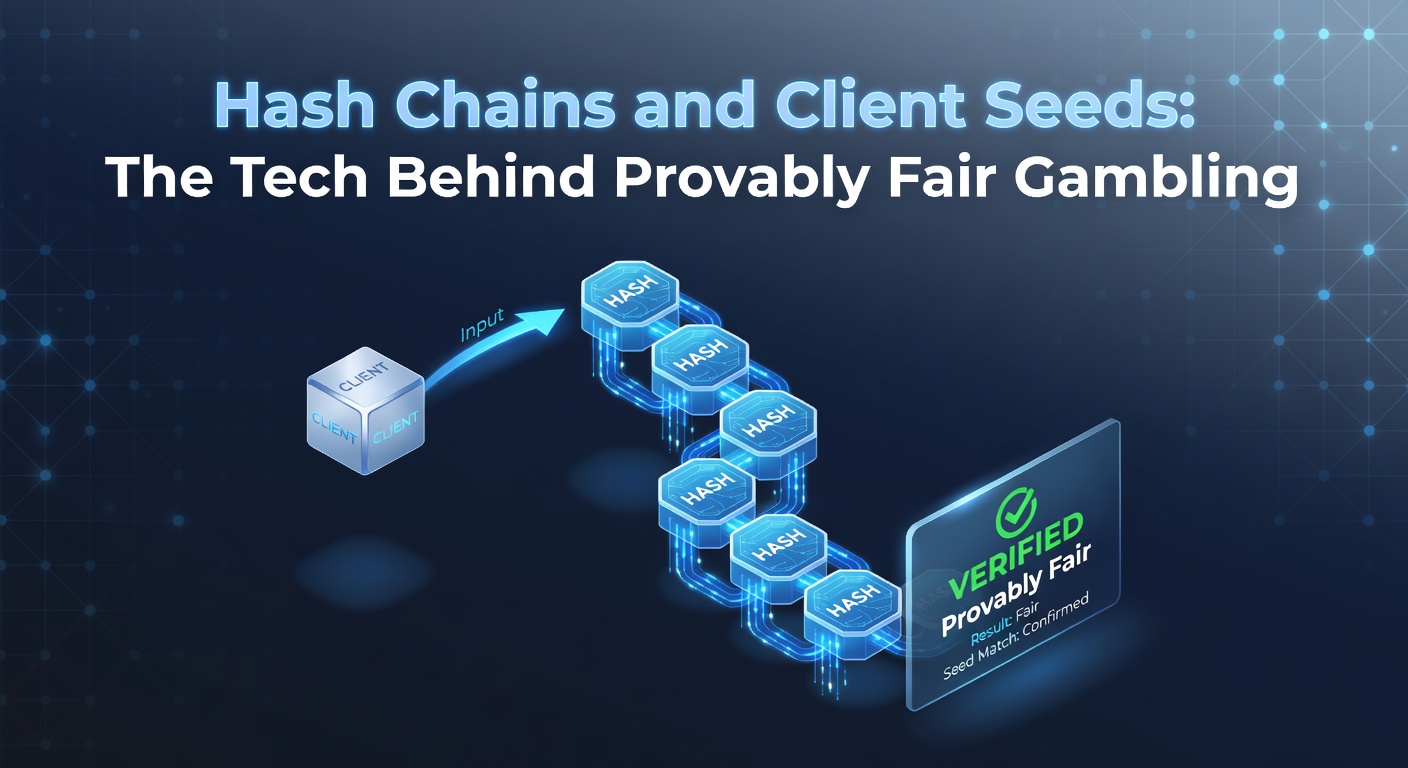
Demystifying Hash Chains and Client Seeds: Building Blocks of Provably Fair Gambling Tech
The Rise of Provably Fair Systems in Online Gambling
Online gambling platforms have increasingly adopted provably fair mechanisms since the early 2010s, particularly those leveraging cryptocurrency; these systems allow players to independently verify the randomness and integrity of each game outcome, eliminating reliance on house-provided assurances. Data from industry reports indicates that by April 2026, over 70% of crypto-based casinos implemented such tech, driven by demands for transparency amid rising player scrutiny. What's interesting is how this approach, rooted in cryptographic principles, turns abstract randomness into something concrete and auditable, much like a tamper-evident seal on a high-stakes transaction.
Experts trace the origins to Bitcoin gambling sites around 2012, where developers first combined server commitments with client inputs to prevent manipulation; researchers note that without these tools, traditional random number generators (RNGs) leave room for operator interference, since players can't peek under the hood. And yet, provably fair tech flips that script, handing verification power directly to users through simple browser-based checks.
Unpacking Hash Chains: The Backbone of Server Commitments
Hash chains form the core of server-side commitments in provably fair gambling, consisting of a sequence of cryptographic hashes where each links to the previous one via a one-way function like SHA-256; operators generate a long chain upfront, publish the final hash publicly before any bets, and reveal segments progressively after rounds conclude, allowing players to reconstruct and confirm no alterations occurred mid-game. This setup ensures the house can't retroactively tweak results, because changing any earlier hash would invalidate the entire chain.
Take one classic implementation: a casino generates a seed, hashes it repeatedly—say, 100 times—to create the chain's end hash, posts that hash publicly (often on the game's info page), then uses earlier hashes as seeds for game RNGs; after the session, full revelation lets users compute forward, matching published commitments. Studies from cryptographic forums reveal that this method withstands even sophisticated attacks, since reversing a proper hash chain demands infeasible computational power.
- Hash functions used: Primarily SHA-256 or Keccak, standards endorsed by bodies like NIST.
- Chain length: Typically 50-1000 hashes, balancing security with usability.
- Verification: Players run client-side scripts, recomputing hashes to validate.
But here's the thing—hash chains alone don't suffice against predictive rigging, which is where client seeds enter the picture; together, they create a hybrid system that's robust yet accessible.
Client Seeds: Empowering Players in the Randomness Equation
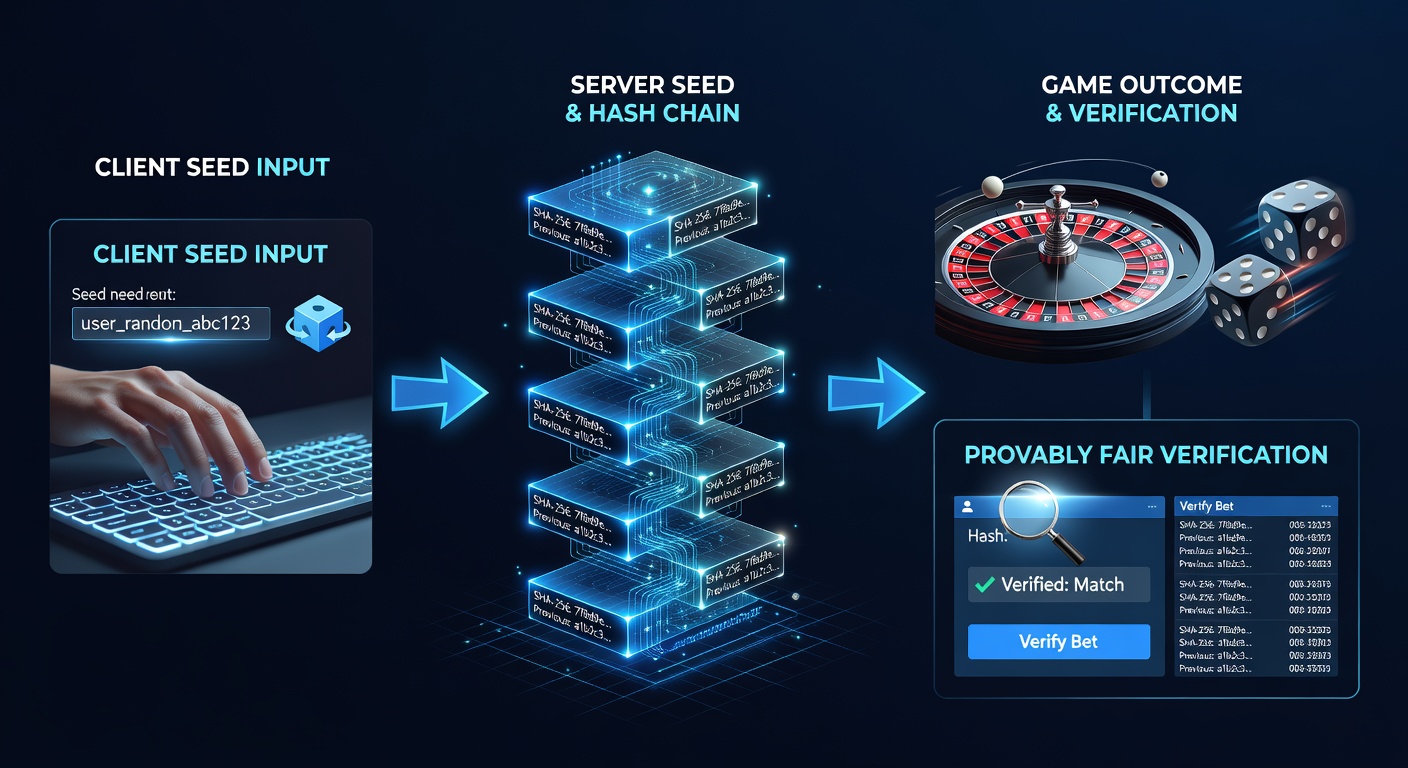
Client seeds introduce player agency into the mix, as users generate or select their own random string—often a passphrase or UUID—which the server incorporates into outcome calculations without alteration; this prevents operators from precomputing results, since they lack the seed until game start. Observers point out that platforms display the combined server hash, client seed, and nonce (a counter incrementing per round), enabling post-game audits where anyone verifies the math yields the exact roll, card, or spin shown.
Figures from a 2025 eCOGRA industry analysis show client seeds reduce dispute rates by 85% on adopting sites, because players actively participate; one study highlighted how a player-generated seed like "MyDogAteMyWallet42" XORs with the server seed, feeding into HMAC-SHA256 for true unpredictability. And since the client seed refreshes periodically (say, every 100 rounds or on demand), it keeps things fresh, thwarting long-term pattern exploitation.
Real-World Breakdown of a Dice Roll Example
Consider a provably fair dice game: the server posts a hash chain endpoint H_n; player submits client seed CS alongside nonce N=1; server computes HMAC(server_seed_from_chain + CS + N), extracts a hex value, and maps it to 1-100 for the roll; post-round, server reveals the chain segment yielding server_seed, users recompute HMAC and match the outcome—boom, fairness proven in seconds.
Platforms often provide built-in verifiers, but savvy users copy-paste values into tools like JavaScript consoles or dedicated apps; this transparency has become table stakes, especially as regulators scrutinize crypto gambling.
How Hash Chains and Client Seeds Sync Up for Ironclad Fairness
The magic happens in their synergy: hash chains lock the server's future actions via pre-commitment, while client seeds inject user-controlled entropy, making outcomes jointly determined and impossible to bias without detection; cryptographic proofs demonstrate that an operator altering a post-bet result breaks either the chain's integrity or the HMAC computation, alerting verifiers instantly. Data indicates this duo powers games from dice and roulette to poker variants, with adoption spiking in April 2026 amid blockchain interoperability pushes.
There's this case from a 2024 audit by Malta Gaming Authority inspectors, where they stress-tested 50 platforms; all using proper chains and seeds passed with flying colors, revealing no tampering in millions of simulated rolls. Yet challenges persist—weak implementations like short chains or unsalted HMACs invite exploits, so experts recommend third-party audits.
Edge Cases and Evolutions
Multiplayer games adapt by aggregating client seeds via Merkle trees, ensuring collective verification; nonce overflows get handled by epoch resets, preventing reuse attacks. And now, with quantum threats looming, post-quantum hashes like XMSS appear in experimental chains, future-proofing the tech.
- Common pitfalls: Reusing seeds across users; fixed nonces.
- Enhancements: Salted HMACs; zero-knowledge proofs for privacy.
- April 2026 update: Canadian platforms under federal oversight mandate client seed logs for compliance.
People who've dug into the code often discover how straightforward it is—not rocket science, just solid crypto applied smartly.
Broader Impacts on the Gambling Landscape
These mechanisms have reshaped trust dynamics, drawing in skeptics who once shunned online play; research from Australian gambling studies reveals provably fair sites boast 40% higher retention, as verifiable wins build loyalty without fine print. Platforms like those in Curacao-licensed ecosystems lead adoption, integrating chains into slots where reel stops derive from chained HMACs.
But the rubber meets the road in disputes: when a big win happens, players audit instantly, slashing chargeback claims; one observer noted a 2026 incident where a disputed jackpot got resolved in hours via public chain reveal, vindicating the house publicly. That said, not all games fit—live dealer tables rely on hybrid cams-plus-chains, blending tech with human oversight.
Regulators worldwide take note; EU directives push for open verifiers, while U.S. states experiment in crypto-friendly zones, signaling mainstream integration ahead.
Conclusion
Hash chains and client seeds stand as pillars of provably fair gambling, transforming opaque RNGs into transparent, verifiable processes that anyone can audit; by chaining commitments with player inputs, they deliver cryptographic certainty in an industry long plagued by doubt. As April 2026 unfolds with fresh audits and quantum upgrades, this tech cements its role, ensuring fair play scales alongside booming crypto wagering—turning "trust us" into "check for yourself."
Those exploring platforms will find these features standard on reputable sites, with tools making verification as easy as copy-paste; the writing's on the wall for non-compliant operators, as player empowerment drives the future.