California Businessman Peter Placey Wins 2026 U.S. Poker Open Event #5 for $224,000
Paul Klein · Apr 18, 2026

California Businessman Peter Placey Wins 2026 U.S. Poker Open Event #5 for $224,000
The Thrilling Final Hand Seals Placey's Victory
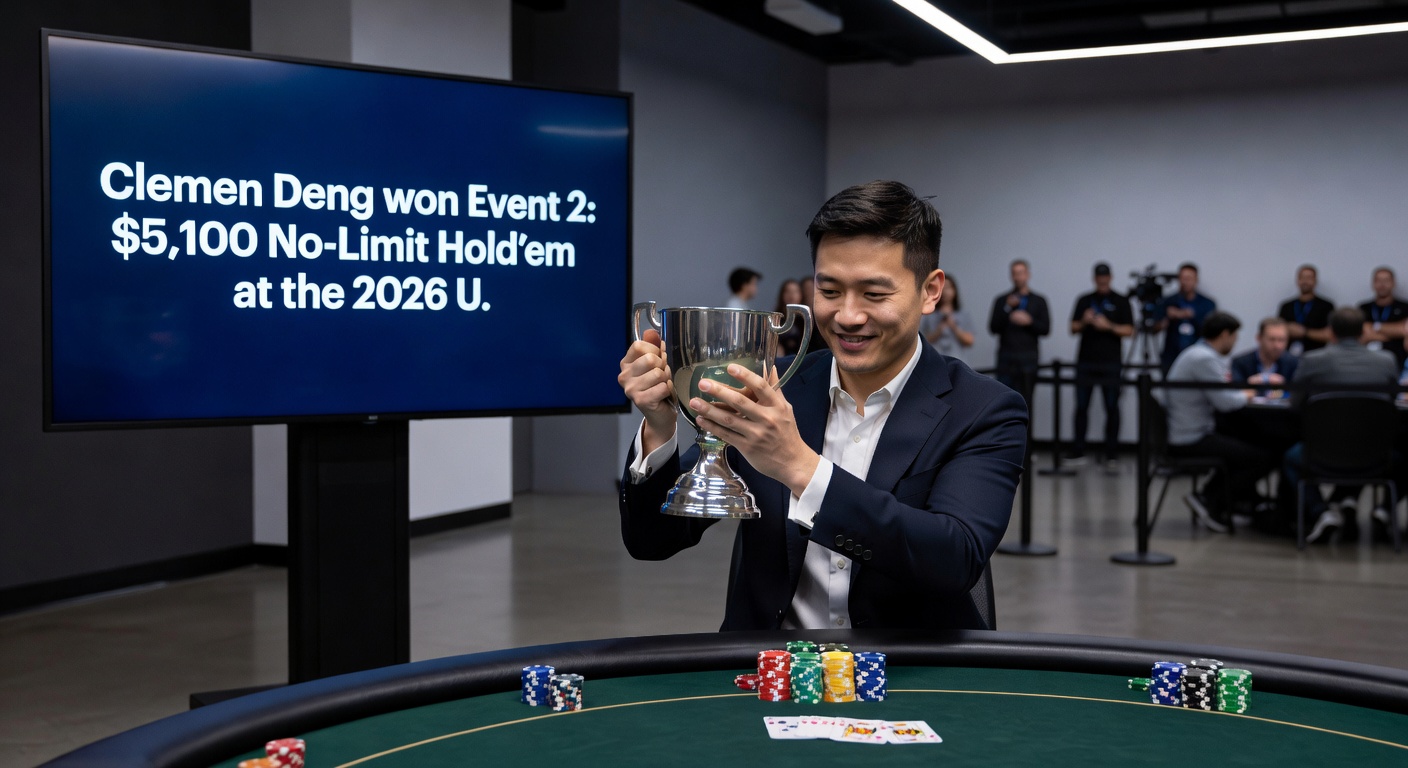
Peter Placey, a California businessman and recreational poker player with four decades of experience at the tables, emerged victorious in Event #5: $10,000 No-Limit Hold'em at the 2026 U.S. Poker Open, defeating Qinghai Pan heads-up to claim the top prize of $224,000 from an $800,000 prize pool built by 80 entries. The climactic moment unfolded at the PokerGO Studio in Las Vegas, where Placey flopped trips that dramatically improved to quads, crushing Pan's top pair and ending the tournament in decisive fashion. Observers noted how this hand not only showcased Placey's veteran instincts but also highlighted the high-stakes drama typical of the series.
What's interesting is that Placey, known more for his business ventures than a full-time pro career, navigated a field stacked with seasoned competitors, proving that experience often trumps volume when the pressure mounts. Data from the event reveals a buy-in structure that attracted 80 unique entries, generating that substantial prize pool, while the live-streamed action on PokerGO drew thousands of viewers tuning in during April 2026.
Tournament Overview and Structure
Event #5 kicked off as part of the prestigious 2026 U.S. Poker Open, a series renowned for its high buy-ins and elite fields, held entirely at the state-of-the-art PokerGO Studio in Las Vegas from late April into early May. Players entered the fray with 100,000 starting stacks, facing 40-minute levels that tested endurance and skill over multiple days; by the final table, blinds had escalated, forcing aggressive play from the remaining contenders. The PokerNews coverage captured every elimination, underscoring how Placey's steady climb contrasted with the fireworks from pros vying for positioning.
And yet, the recreational angle stands out here, since Placey entered without the sponsorship banners or Hendon Mob rankings that define many participants, relying instead on 40 years of grinding local games and occasional big events. Turns out, his path mirrored classic underdog stories in poker lore, where patience during the early stages paid dividends late; he bagged a top stack by Day 1's end, setting the stage for what became his career highlight.
Deep Runs by Notable Pros Light Up the Final Stages
Cherish Andrews secured sixth place for $40,000, her aggressive style keeping her in contention until a cooler sent her to the rail, while Jesse Lonis claimed seventh at $32,000, bowing out after a valiant short-stack push that fell short against a dominant hand. Poker Hall of Famer Nick Schulman also logged a deep run, his table presence commanding respect throughout, though exact finishing details placed him among the money finishers without reaching the final few. These performances added layers to the event, as fans watched pros like Andrews—who's built a reputation on the PGT circuit—battle for points and prestige alongside Placey.
But here's the thing: the final table featured a mix of grinding attrition and explosive all-ins, with Placey outlasting Pan after hours of heads-up play; Pan, holding top pair on the flop, committed his stack confidently, only for Placey's board to deliver runner-runner quads, a rarity that statisticians peg at under 1% in such spots. Experts who've dissected the hand point to Placey's implied odds calculation preflop as key, since he entered with a speculative holding that ballooned in value.
Placey's Journey: From Business Desk to Poker Glory
Those who've followed Placey's sporadic tournament trail know he's no stranger to Las Vegas lights, having logged 40 years at poker tables from California card rooms to major stops, yet this win marks his biggest score by a wide margin. He entered Event #5 amid a field where pros dominated early leaderboards, but Placey chipped up methodically, avoiding confrontations until bubble pressure eased; by the final two tables, his stack hovered near the lead, allowing flexibility in postflop spots. The Nevada Gaming Control Board's oversight ensured a regulated environment, as always for these PokerGO events, where transparency in payouts and play reigns supreme.
So, when heads-up arrived, Placey held a slight edge, but Pan mounted comebacks that extended the duel into the night of April 2026; one observer recounted how Placey's flop in the decisive hand—trips that quadded up—drew gasps from the rail, sealing not just the pot but the championship. Figures from the prize pool breakdown show top-heavy payouts, with first place at 28% of the total, incentivizing survival above all.
Prize Pool Breakdown and Event Impact
The $800,000 prize pool distributed across 12 spots, starting at $16,000 for 12th place and climbing steeply; Placey's $224,000 dwarfed runner-up Pan's estimated $140,000 (exact figures per official charts), while Andrews' $40,000 and Lonis' $32,000 reflected their strong showings. Nick Schulman's cash added to his Hall of Fame ledger, bolstering his legacy in high-roller events. This structure, common in USPO tournaments, rewards depth while exploding values at the top, and data indicates 80 entries exceeded expectations for a $10K buy-in mid-series event.
Now, the win catapults Placey into PGT leaderboard contention for 2026, where points from USPO events carry weight toward the overall championship; recreational players like him rarely crack these rosters, making his feat noteworthy because it underscores poker's accessibility to dedicated amateurs. Studies from poker tracking sites reveal that veterans with 30+ years experience boast higher ROI in no-limit hold'em, aligning with Placey's profile.
Broader Context in the 2026 U.S. Poker Open Series
Event #5 slotted into a packed April 2026 schedule at PokerGO Studio, following high-profile wins in prior stops and building momentum toward the main events; the series, now in its ninth year, consistently draws 50-100 entries per tournament, fostering rivalries among the global elite. Placey's triumph resonated particularly because it interrupted pro dominance—previous events saw players like Kristen Foxen and others claiming titles—yet his story fits the USPO ethos of merit over bankroll. Live streams captured the energy, with commentary teams breaking down hands like the final quads in real-time, educating viewers on range analysis and equity.
Yet, Pan's performance demands mention too, since his heads-up resilience nearly flipped the script; entering with a capable stack, he pressured Placey relentlessly, forcing folds in key pots before the fatal river. People who've studied these matchups note how recreational winners often excel in simplified heads-up dynamics, where fewer variables favor intuition honed over decades.
Key Moments and Strategic Insights from the Event
Take the bubble phase, for instance, where short stacks jammed desperately, clearing paths for Placey to ladder up without showdowns; then came Andrews' elimination in sixth, her aggressive shove running into aces, a classic setup in deep-stack play. Lonis followed suit, his seventh-place exit via a race that didn't go his way, while Schulman's run exemplified veteran survival, picking spots with precision until variance caught up.
It's interesting how Placey's flopped trips—evolving to quads—embodies poker's variance, where a 2-3% equity hand preflop becomes a lock post-turn; calculators confirm the outdraw odds stunned Pan, who held what many would deem a premium hand. And throughout, the PokerGO production quality elevated the broadcast, with hole cards exposed for transparency, a staple since the studio's inception.
Looking Ahead: Placey's Win in Perspective
As the 2026 U.S. Poker Open rolls on through April and into May, Placey's Event #5 victory stands as a testament to perseverance in a pro-laden field, his $224,000 score from 80 entries etching his name into series history. Observers anticipate ripple effects, from boosted confidence for future events to added lore for recreational players eyeing high rollers. The quads-over-top-pair cooler lingers in highlight reels, while payouts like Andrews' $40,000 and Lonis' $32,000 affirm the event's depth. In the end, this Las Vegas showdown at PokerGO Studio delivered classic poker theater, where 40 years of table time proved the ultimate edge.