Award Cycles Reshape Bonus Redemption Timelines in Regulated Markets
Jordan Schmid · Jun 23, 2026
Award Cycles Reshape Bonus Redemption Timelines in Regulated Markets
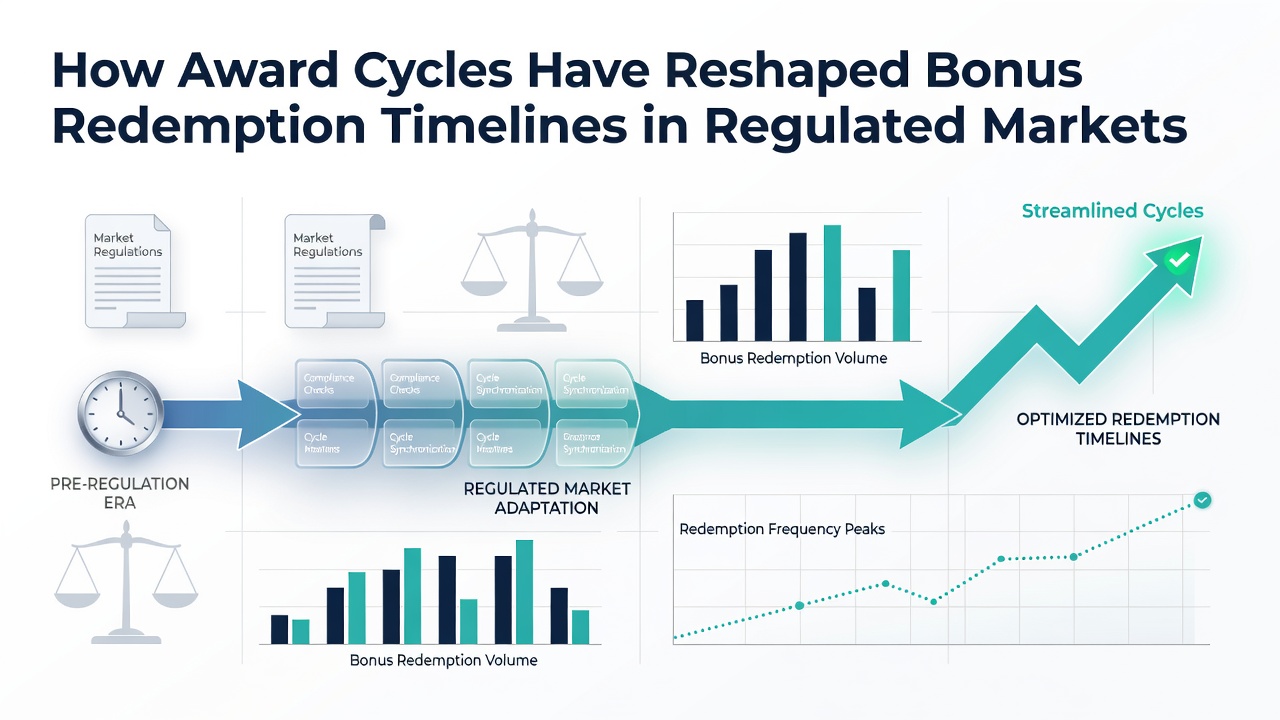
Regulated gambling markets have seen award cycles evolve from annual loyalty resets into quarterly and even monthly structures that directly compress bonus redemption windows. These adjustments stem from compliance requirements and operational data that operators use to manage player engagement across jurisdictions.
Data from multiple oversight bodies shows redemption periods shrinking from 90 days in earlier frameworks to 30 or 45 days under newer cycles. This compression occurs because award cycles now tie directly to real-time performance metrics rather than fixed calendar dates.
Mechanics Behind Modern Award Cycles
Award cycles function as structured intervals where operators evaluate player activity and issue bonuses or loyalty rewards. In regulated environments these cycles incorporate mandatory reporting intervals that force operators to recalibrate redemption rules frequently. Observers note that shorter cycles align with quarterly financial disclosures and tax obligations in places like Nevada and several Australian states.
Operators adjust timelines because longer redemption windows create accounting liabilities that regulators require to be resolved within specific reporting periods. When an award cycle ends, any unredeemed bonuses often expire automatically to close the books cleanly for the next cycle.
Regional Variations in Redemption Adjustments
Nevada Gaming Control Board statistics indicate that properties implementing monthly award cycles reduced average redemption windows by 40 percent between 2023 and 2025. Similar patterns appear in Canadian provincial frameworks where Ontario's Alcohol and Gaming Commission introduced cycle-based reporting that prompted operators to shorten bonus validity periods.
Australian operators working under state-level regulations adopted quarterly cycles that synchronize with local tax collection dates, resulting in redemption deadlines falling 15 to 20 days earlier than previous annual models. These changes reflect coordinated efforts between operators and regulators to maintain transparent financial tracking.
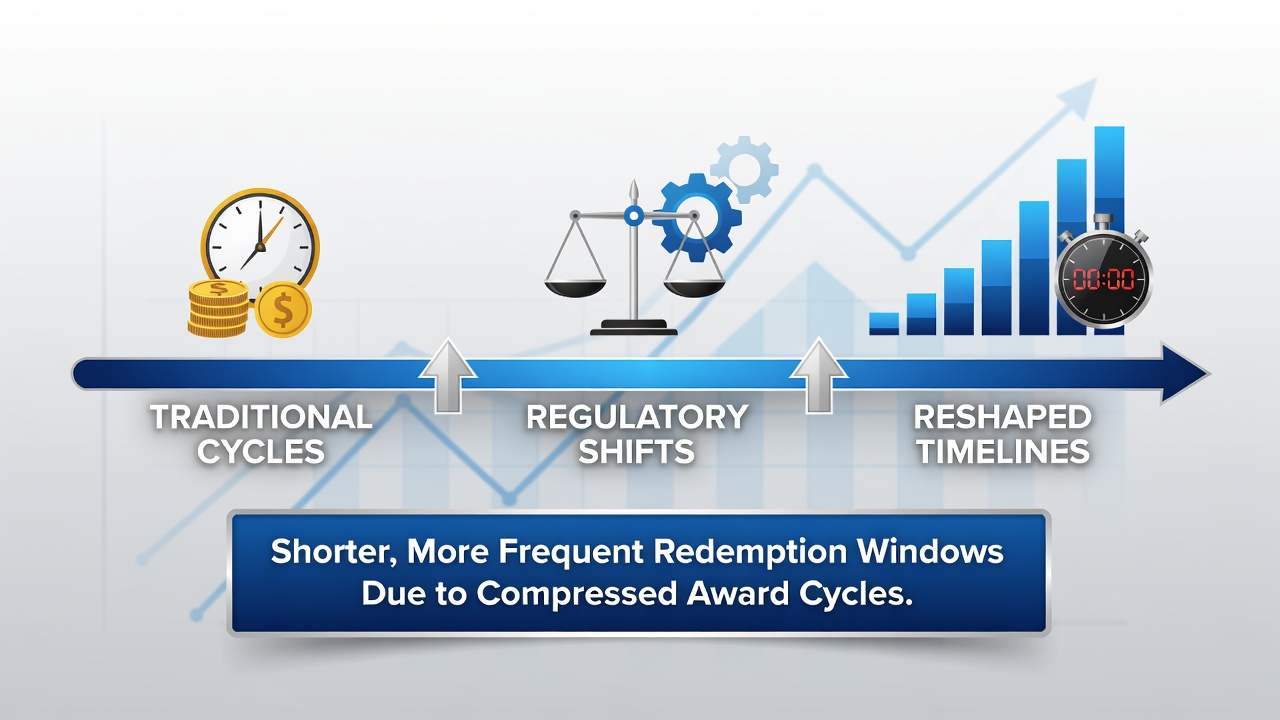
European markets outside the UK have followed comparable trajectories. Reports from the European Gaming and Betting Association highlight how member operators in several countries now reset award cycles every 60 days, which forces bonus redemption to occur within tighter windows to satisfy cross-border compliance standards.
Regulatory Drivers and Compliance Pressures
Regulators require detailed tracking of bonus liabilities because unredeemed amounts represent potential future payouts that affect operator solvency calculations. Award cycles provide natural checkpoints where regulators can verify that redemption rules match reported financial positions. This linkage explains why cycles have become more frequent and why redemption timelines have contracted accordingly.
Studies from university research centers such as the University of Nevada, Las Vegas International Gaming Institute document how cycle frequency correlates with reduced redemption periods across multiple jurisdictions. The research tracks data from 2022 through mid-2026 and shows consistent compression patterns regardless of market size.
As of June 2026 several jurisdictions are testing even shorter 15-day redemption windows tied to weekly award sub-cycles within larger monthly structures. These pilots aim to determine whether ultra-short timelines improve player compliance rates or simply increase forfeiture numbers.
Player Behavior and Redemption Patterns
Behavioral data collected by operators reveals that players respond to shorter redemption windows by redeeming bonuses earlier in each cycle. This front-loading effect reduces the number of expired bonuses yet increases operational workload during the first half of every award period. Regulators view this shift positively because it lowers outstanding liability figures at cycle close.
Operators have introduced automated reminders and simplified redemption interfaces to accommodate the compressed schedules. These tools emerged directly from cycle redesigns that left less time for manual player follow-up.
Conclusion
Award cycle restructuring continues to drive measurable changes in bonus redemption timelines across regulated markets. Data collected through 2026 shows operators and regulators converging on shorter, more frequent cycles that reduce liability windows and improve reporting accuracy. These adjustments appear consistently in North American, Australian, and European frameworks despite differing local rules. The pattern suggests redemption timelines will remain closely linked to award cycle frequency as markets continue refining compliance mechanisms.